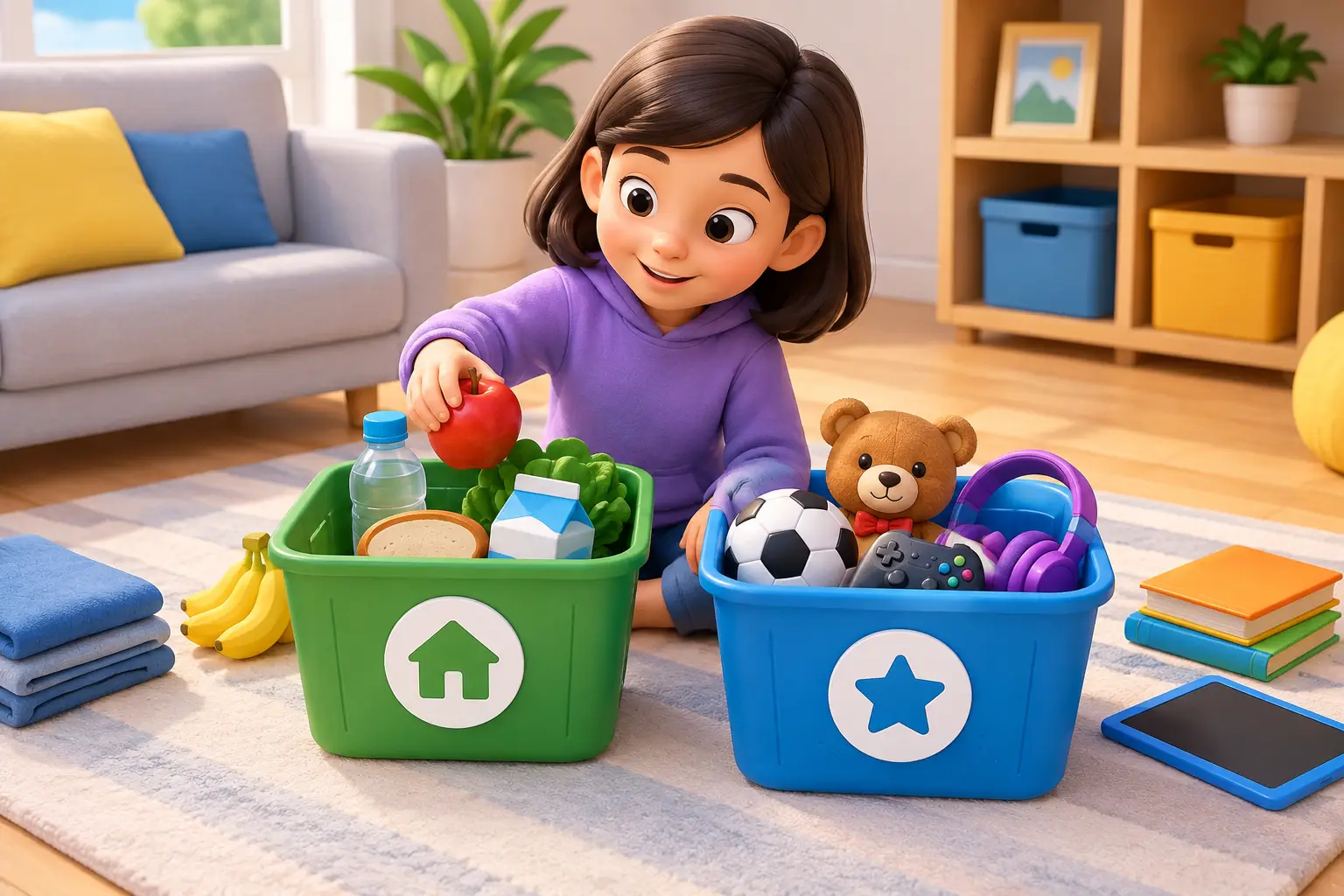
A child standing in the checkout line may see a candy bar as a need. A parent may see it as a treat that has to wait. That small disagreement is exactly why needs and wants activities kids can do at home are useful. They turn an abstract money lesson into a calm family conversation about choices, priorities, and what happens when a budget has limits.
The goal is not to make children feel guilty for wanting fun things. Wants are normal. The goal is to help them recognize that money has more than one job: covering essentials, preparing for future needs, and making room for enjoyable choices when the family budget allows.
What kids should learn about needs and wants
A need is something required for health, safety, and basic daily life. Food, a safe place to live, necessary clothing, medical care, and transportation to school or work often belong in this category. A want is something that is nice to have but not essential for getting through the day, such as a new game, branded sneakers when a working pair is already available, or takeout when there is food at home.
Still, this lesson is not always as simple as sorting items into two boxes. A winter coat is a need in a cold climate, while owning a second coat in a different color may be a want. Internet access may be necessary for schoolwork in one household. A birthday gift may be a want from a strict budgeting view, yet an important family tradition. Let children hear that context matters. It teaches judgment, not just memorization.
It also helps to explain that a need can have a cost limit. A child may need shoes, but they do not necessarily need the most expensive version. This is where budgeting begins: meeting the need first, then comparing options and deciding whether extra features are worth the additional money.
Needs and wants activities kids can repeat
The best activities use things children already see at home. Keep them short, concrete, and connected to a decision they might actually make.
Sort a real shopping list
Before a grocery or household shopping trip, write down eight to 12 items you plan to buy. Include a mix of basics and extras, such as milk, bread, soap, fruit, batteries, cookies, flowers, and a magazine. Ask your child to label each item as a need, a want, or “it depends.”
The third category is valuable. It gives children room to explain their reasoning. For example, batteries may be a need if the smoke detector needs them, but a want if they are for an extra toy. Ask, “What would happen if we waited a week to buy this?” Their answer often reveals whether they understand urgency and priority.
Build a $20 choice challenge
Give your child a pretend $20 budget and a list of possible purchases. Include at least one essential item, one savings goal, and several fun options. For younger children, use pictures or household items instead of written choices.
For example, their choices might include a $6 lunch item, $5 toward replacing worn-out school supplies, $4 toward a savings goal, a $7 toy, and a $3 snack. They cannot choose everything. That is the point. When the money runs out, ask what they would keep, what they would delay, and why.
Do not rush to correct the first choice. Let the natural trade-off do the teaching. If they spend the full $20 on treats, they will see there is nothing left for the goal they said mattered. A second round lets them adjust without real-world consequences.
Make a family “wait list”
A wait list is a simple way to show that “not now” does not always mean “never.” When a child asks for a nonessential purchase, write it down with the price and date. Agree to revisit it after a week or two.
Some wants fade quickly. Others remain meaningful, which can help a child decide to save for them. This activity builds patience without dismissing what your child wants. It also makes room for a practical discussion: Is there a lower-cost version? Could it be a birthday request? Would earning toward it make sense?
Compare two versions of the same need
Choose an item your family genuinely needs, such as a backpack, lunch container, winter gloves, or headphones for school. Compare two or three options with different prices and features. Ask what each version does, how long it may last, and whether the higher price solves a real problem.
This introduces value without telling children that the cheapest choice is always best. A low-cost item that breaks immediately may not be the best value. On the other hand, a premium feature may not matter if the basic version does the job well. Children learn that responsible spending is about purpose, not simply spending less.
Turn chores into planned choices
When children earn rewards for age-appropriate household responsibilities, they can practice dividing those rewards among spending, saving, and giving goals. The amount can be small. What matters is that the child sees a connection between effort, earning, and decisions.
Start with a simple question after each reward: “What does this money need to do before you decide what you want it to do?” A child may choose to save for a planned purchase, set aside money for a family goal, or spend a portion on something fun. Parent guidance keeps the activity realistic and appropriate for the child’s age.
Create a needs-and-wants collage
For children who learn visually, use store flyers, printed pictures, or drawings. Make two large sections labeled “Need” and “Want,” then invite your child to place pictures in each section. Add an “It Depends” section if they are ready for more nuanced thinking.
Afterward, choose three pictures and talk through them. The conversation matters more than getting every answer exactly right. You might ask, “Could this become a need in a certain situation?” or “Who in our family might see this differently?”
Keep the lesson age-appropriate
For early elementary children, focus on recognizing basic categories. They can sort pictures, make simple choices, and learn that money is limited. Avoid bringing adult financial stress into the activity. The lesson should feel safe and manageable.
Older elementary children can work with a small budget, compare prices, and practice waiting for a purchase. Middle school students are often ready to connect needs and wants to short-term goals, recurring expenses, and the difference between spending everything now and saving for later.
Teenagers can take the discussion further by examining advertising, subscriptions, borrowing, and opportunity cost. They may also be ready to practice budgeting and simulated investing. Money basics and practice investing come first. Real market information can be educational, but children do not need real-money accounts or live trades to learn that every financial decision includes risk and trade-offs.
Questions parents often ask
Should I call every nonessential purchase a want?
Usually, yes, but use a respectful tone. A want is not foolish or bad. Calling it a want simply helps your child understand that it competes with other uses for money. Children are more likely to learn when they do not feel judged for wanting something.
What if my child disagrees with me?
Ask them to explain their reasoning before giving your answer. You may learn about a school need, a social concern, or a detail you missed. Then set the boundary clearly if needed. Parents remain the decision-makers, especially when spending affects the family budget, safety, or online access.
Can an app help with this lesson?
A structured learning tool can make the routine easier to maintain. Trading Alchemist Adventure helps families connect chores, rewards, saving, budgeting, goals, and practice investing in one parent-guided experience. Everything is simulated for learning: it does not hold real money, connect to bank accounts, or execute live trades. Parents can guide the pace and control access to higher-risk topics.
How often should we do these activities?
Brief, repeated practice works better than one long lesson. Try one conversation before a shopping trip, one budget choice after a reward, or one wait-list review each week. Consistency helps children see that needs and wants are part of everyday decision-making, not a test with one perfect answer.
The next time your child asks for something, pause before giving a quick yes or no. Ask what job they think that money should do first. That one question can build the habit of thinking before spending, and it leaves room for both responsibility and joy.