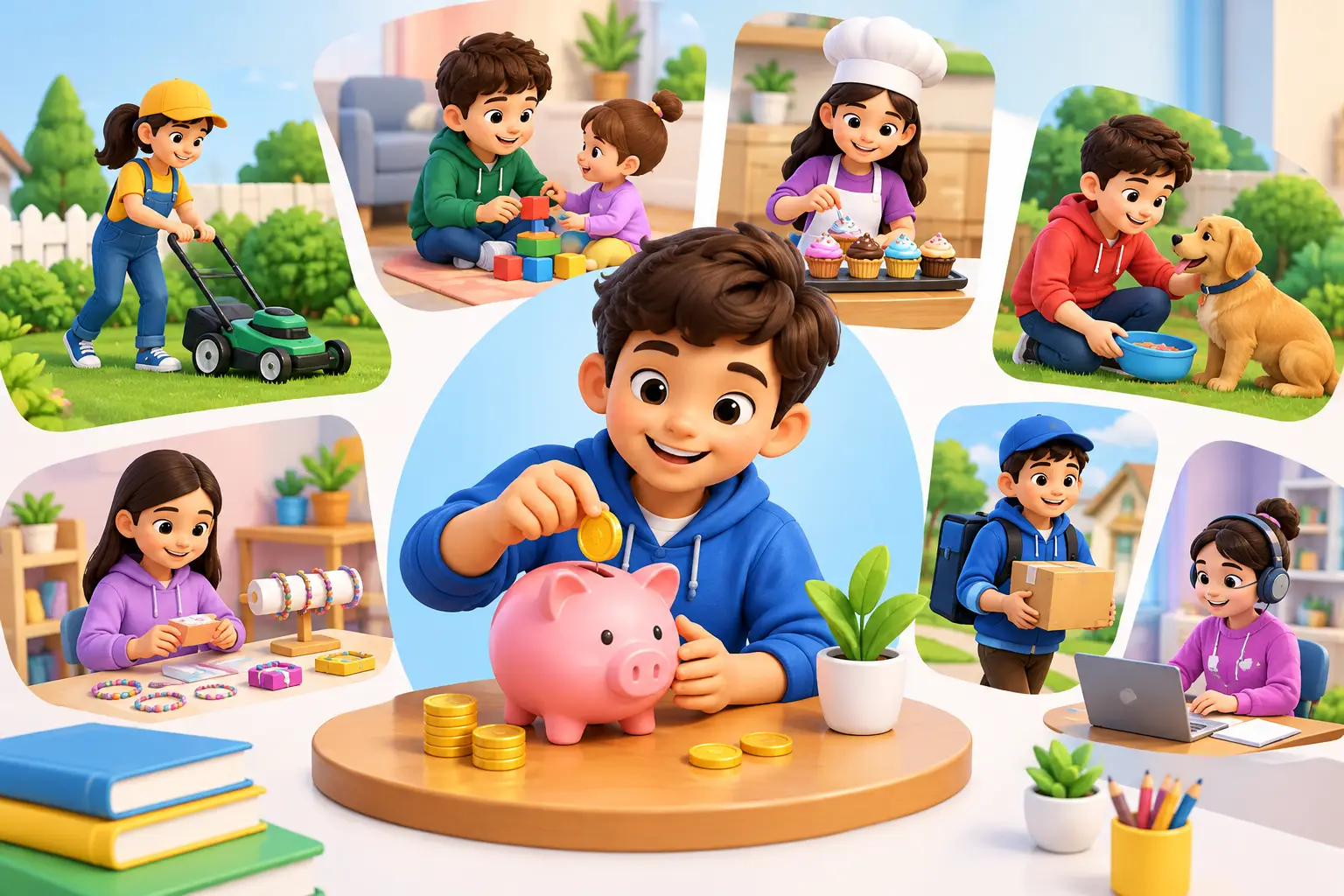
A child who wants a new game, a bike, or spending money has a real reason to learn. That is the best place to begin. When parents ask, “how can kids earn money?” the goal is not simply to create another reward system. It is to help children connect effort, choices, and patience with the things they want.
For school-age children, the safest first opportunities are usually close to home, supervised by a parent, and simple enough to complete well. Earning should come before saving, budgeting, and practice investing because children need to understand where money comes from before they decide what to do with it.
How Can Kids Earn Money Safely?
Kids can earn money safely by completing agreed-upon work for their family or, when they are ready, offering simple, parent-approved help to trusted people nearby. The work should be age-appropriate, the payment should be clear before the task begins, and adults should stay involved.
This does not mean every household responsibility needs a price tag. Children should still help because they are part of the family. Making their bed, putting away their belongings, or clearing their own dishes can remain expected contributions. Paid jobs can be the extra tasks that take additional time, responsibility, or effort.
That distinction matters. If every routine duty is paid, children may learn that helping at home is optional. If no work is paid, they can miss the useful connection between earning and managing money. A balanced approach gives them both family responsibility and a chance to practice earning.
10 Age-Appropriate Ways Kids Can Earn Money
The right option depends on a child’s age, abilities, schedule, and your family’s rules. Start with one or two jobs rather than turning the household into a complicated payroll system.
- Complete extra household jobs. Washing the car with help, sorting a garage shelf, pulling weeds, cleaning baseboards, or organizing a pantry are reasonable paid jobs when they go beyond everyday responsibilities.
- Care for pets with supervision. A child might refill water bowls, brush a calm pet, help prepare food, or collect mail for a trusted neighbor who is away. Adults should handle unfamiliar animals, medications, and any task that requires entering another home.
- Help with yard work. Raking leaves, watering plants, picking up sticks, and sweeping a porch can work well for younger children. Parents should decide whether a child is ready for tools, heat, traffic, or other outdoor risks.
- Offer simple seasonal help. Older children may help decorate for a holiday, bring in bins after trash day, wash outdoor furniture, or help a neighbor prepare a garden. These jobs are easy to define and do not require online contact with strangers.
- Organize family items. Sorting socks, matching containers and lids, labeling storage bins, or preparing a donation box can be useful work. Give a clear finish line so the child knows what “done” looks like.
- Help younger siblings during a parent-led activity. A child could read a book, set up a game, or play nearby while a parent cooks dinner or folds laundry. This is not a substitute for babysitting or adult supervision, but it can build reliability.
- Make and sell a simple item through a parent. Greeting cards, artwork, baked goods, or handmade bracelets may be appropriate for a family event or a parent-managed sale. Parents should oversee costs, food safety, pricing, and all communication with buyers.
- Do a task for a family member. Helping a grandparent sort photos, carry light groceries, or learn a phone feature can be meaningful work. Keep expectations realistic and make sure the child can complete the task respectfully.
- Recycle eligible items. In places where container deposits are available, children can help sort and return approved containers with an adult. Teach them to count the refund, subtract any expenses, and decide where the earnings will go.
- Build a family project role. A child can earn a set amount for helping plan a garage sale, inventory donated items, create signs, or track sales with a parent. This introduces basic business thinking without asking a child to manage money or customers alone.
Be cautious about online gig work, social media promotion, doorstep sales, and meeting customers. These options can create privacy and safety concerns, and many platforms have age limits. For children, a parent should control contact details, payments, transportation, and decisions about where and when work happens.
Set Up Earning Rules Before the First Job
A clear agreement prevents the most common problem: a child believes a job is finished while a parent believes it needs to be redone. Before work begins, agree on the task, the deadline, what a completed job looks like, and how much it pays.
For example, “clean the playroom” is vague. “Put all blocks in the blue bin, return books to the shelf, place dirty clothes in the hamper, and vacuum with an adult checking afterward” gives a child a fair target. Pay after the work is checked, not before.
Consistency is more helpful than large payments. A modest amount for a job done carefully teaches more than an occasional oversized reward. It also helps children see that earning takes time. If a child wants something expensive, they can track several jobs over several weeks instead of expecting one task to pay for everything.
A simple written job chart can help, especially when more than one child participates. Keep it visible, use language each child understands, and avoid changing the rules after the work is done. Children learn trust when adults keep agreements too.
Turn Earnings Into a Money Routine
Earning money is only the first step. Without a plan, cash can disappear quickly, and the learning opportunity disappears with it. When a child gets paid, pause before spending and ask three practical questions: What do you want to buy? What do you want to save for? Is there a small amount you want to give or share?
A child does not need a complicated budget. They do need practice making trade-offs. If they spend all $10 today, they have $0 toward the larger goal next week. If they save part of it, they move closer to that goal. The lesson is not that spending is bad. It is that every dollar can only be used once.
For younger children, labeled jars or envelopes make the choices visible. Older children can use a parent-guided tracker to see earnings, savings, goals, and spending in one place. Let them make small mistakes with small amounts. Choosing a toy that loses its appeal quickly can be a useful lesson when the consequences are safe and manageable.
When Should Kids Learn About Investing?
After children have experience earning, saving, and setting a goal, they can begin learning why some people invest for long-term goals. This should start as education, not a promise of quick gains and not an invitation to take real financial risks.
Explain that investing involves uncertainty. A stock price can rise or fall, and a company that seems exciting is not automatically a good investment. Children benefit from seeing the difference between saving money for a near-term purchase and investing money for a long-term goal, but they do not need access to live trading to learn that difference.
Trading Alchemist Adventure follows this progression: earn first, then save and budget, then practice investing with real market data in a parent-guided simulation. Everything is simulated for learning. It does not hold real money, connect to bank accounts, or execute live trades. Parent controls also allow families to decide when, or whether, children are ready to explore higher-risk topics.
FAQ: Should Kids Get an Allowance or Earn Money?
Either approach can work, and some families use both. An allowance can give children regular practice managing a set amount, while paid extra jobs teach the connection between effort and earnings. The best choice is the one your family can explain and apply consistently.
If you use an allowance, avoid presenting it as payment for basic belonging in the household. If you pay for extra work, define the jobs clearly. In both cases, give children a chance to save toward something they care about.
FAQ: How Much Should a Child Be Paid?
There is no universal rate. Consider the time required, the level of responsibility, your family budget, and local expectations. A younger child completing a short indoor task may earn a small amount, while an older child handling a larger supervised project may earn more.
The amount matters less than the system. Children should know why one job pays more than another, and parents should avoid paying for unsafe work or tasks beyond a child’s ability. A fair system is predictable, understandable, and adjusted as children grow.
Start with one paid job this week and one simple savings goal. A child does not need a full financial plan to begin building money confidence. They need a safe chance to earn, a clear choice about what happens next, and a parent beside them to turn everyday moments into lasting habits.