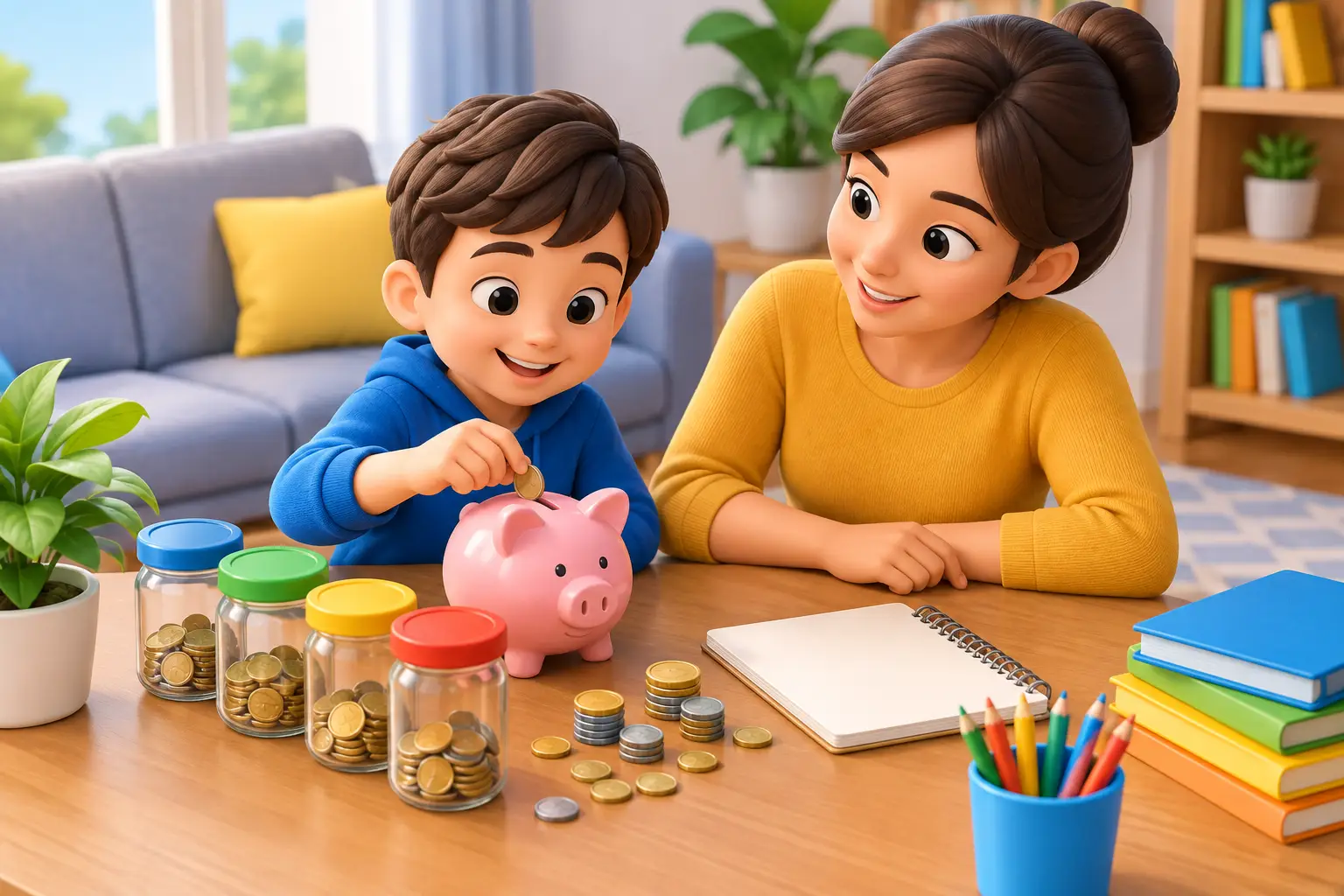
A child who wants a $12 toy, a snack at the checkout line, and money for a school fundraiser is already meeting the core problem of budgeting: one amount of money cannot cover every want. The best budgeting activities for children make that lesson concrete without turning family life into a lecture. They give children small, safe chances to earn, plan, choose, and adjust with a parent nearby.
The goal is not to make a second grader worry about bills or predict the stock market. It is to help them understand that money has jobs. Some can be saved for later, some can be spent now, and some choices mean waiting for another choice. Start with familiar situations and keep the amounts low enough that mistakes stay educational, not stressful.
Why budgeting activities work better than money talks
A conversation about saving is useful, but a child usually understands more after making an actual choice. When they divide chore earnings between a goal and a small treat, they can see the result of their decision. When they plan the cost of a family movie night, they learn that a budget is a plan, not a punishment.
The most useful activities have three parts: the child has a clear amount to work with, a real or realistic decision to make, and time to reflect afterward. Parents remain in charge of the rules, the amounts, and what is appropriate for the child’s age. This structure lets children practice independence within safe boundaries.
7 best budgeting activities for children
1. Give chore earnings a job
Connect a few age-appropriate household responsibilities to a modest reward, then help your child decide where that reward will go before it is spent. They might split $5 between a short-term treat, a savings goal, and a family contribution such as a birthday card for a sibling.
The percentages do not need to be perfect. A young child may begin with two categories: save and spend. An older child can add giving, long-term goals, or a reserve for unexpected needs. What matters is the pause before spending. Ask, “What do you want this money to help you do?” That question teaches planning without pressure.
2. Build a visual goal tracker
A savings goal feels distant when it exists only as a number. Create a paper tracker, a jar system, or a simple chart for a goal your child genuinely cares about. Write down the total cost, show how much they already have, and add progress after each earning opportunity.
This activity also introduces a useful budgeting trade-off. If your child spends part of their money on something small today, do not frame it as failure. Let them see how it changes the timeline for their larger goal. They are learning that spending can be enjoyable and that choices have consequences at the same time.
3. Plan a small family event
Give your child a fixed budget to plan one part of a family activity, such as a game night snack, a picnic, or a weekend breakfast. For example, they may have $15 to choose drinks, fruit, and a dessert. Look at prices together and let them make choices within the limit.
A family event budget works especially well because it shows that a plan can create something positive. If one item costs more than expected, your child can compare alternatives rather than simply being told no. Keep the focus on questions: What is the priority? What could we swap? Can we save some money for next time?
4. Use a pretend store at home
Set up a small store using items your child already enjoys: pencils, extra screen time, choosing dinner, stickers, or a later bedtime on a weekend. Give each item a price and provide a limited number of play dollars. Your child can shop once a week or save their dollars over several weeks.
This is a low-stakes way to practice delayed gratification. It also makes impulse spending visible. A child who spends all their play dollars on the first item may feel disappointed later, but no real money is lost. Review the experience kindly: “Would you make the same choice next time?”
5. Compare needs, wants, and priorities
Choose a short shopping receipt, a grocery flyer, or a made-up list for a school trip. Ask your child to sort the items into needs, wants, and optional extras. Then give them a total amount that will not cover everything and let them create a plan.
The point is not that all wants are bad. Children need to hear that enjoyable purchases can belong in a budget. The lesson is that priorities come first and that there is a limit. For older children, add sales tax or compare a name-brand item with a less expensive option. For younger children, keep it as simple as choosing three items from five.
6. Create a weekly spending check-in
Once a week, spend five or ten minutes looking back at the child’s money choices. Use a notebook, a family whiteboard, or a child-friendly app record. Discuss what came in, what was saved, what was spent, and what is still planned.
Keep this check-in factual, not corrective. A child is more likely to be honest when they know they will not be shamed for buying something they later regret. If they ran out of spending money, help them identify what happened and when their next earning opportunity is. This builds the habit of reviewing a plan and making adjustments.
7. Practice investing only after budgeting basics
Older children may be curious about stocks, market news, or investing because they hear adults discuss it. That curiosity can be useful, but investing should not replace earning, saving, and budgeting lessons. A child first needs to understand that money set aside for a near-term goal should not be treated like money for a risky experiment.
Use simulated investing for learning, not real transactions. Trading Alchemist Adventure, for example, lets families connect chores, rewards, goals, lessons, and practice investing with real market data while keeping everything simulated. It does not hold money, connect bank accounts, or execute live trades. Parents control access to higher-risk topics, so money basics and practice investing come first.
Match the activity to your child’s age
For children ages 5 to 7, focus on visible money, two simple categories, and short goals. A jar for saving and a jar for spending can be enough. They benefit from frequent feedback and choices that happen within a few days.
Children ages 8 to 11 can handle a weekly plan, a larger goal, and basic comparisons between prices. They can also begin to understand that earning takes effort and that saving creates options. Let them make a few more decisions, while keeping the amounts and expectations manageable.
For children 12 and older, introduce recurring costs, longer-term goals, and a simple record of income and spending. They may be ready to plan for activities with friends, school expenses, or a larger purchase. This is also the right time to discuss online spending, advertising, and why a budget needs room for surprises.
Questions parents often ask
Should children use real money?
They can, but they do not have to. Cash can be helpful for younger children because it is visible. A simulated system can be better when you want to practice decisions without handling cash or exposing a child to financial accounts. The learning comes from making a plan and reviewing choices, not from the form the money takes.
What if my child spends everything right away?
Treat it as information, not a character flaw. Let the natural, low-stakes consequence do the teaching: there is less available for the later goal. Then help your child make a different plan for the next earning period. Avoid replacing the money immediately, since that can erase the lesson.
How much guidance is too much?
Give enough support for success, but leave room for the child to decide. You can set the budget, explain the choices, and protect essential family needs. Your child can choose which goal matters most, whether to wait, and how to respond after a mistake. Those small decisions are where confidence grows.
A budget becomes meaningful when children see it helping them move toward something they value. Keep the routine calm, repeat it often, and let every small choice become practice for a more independent future.